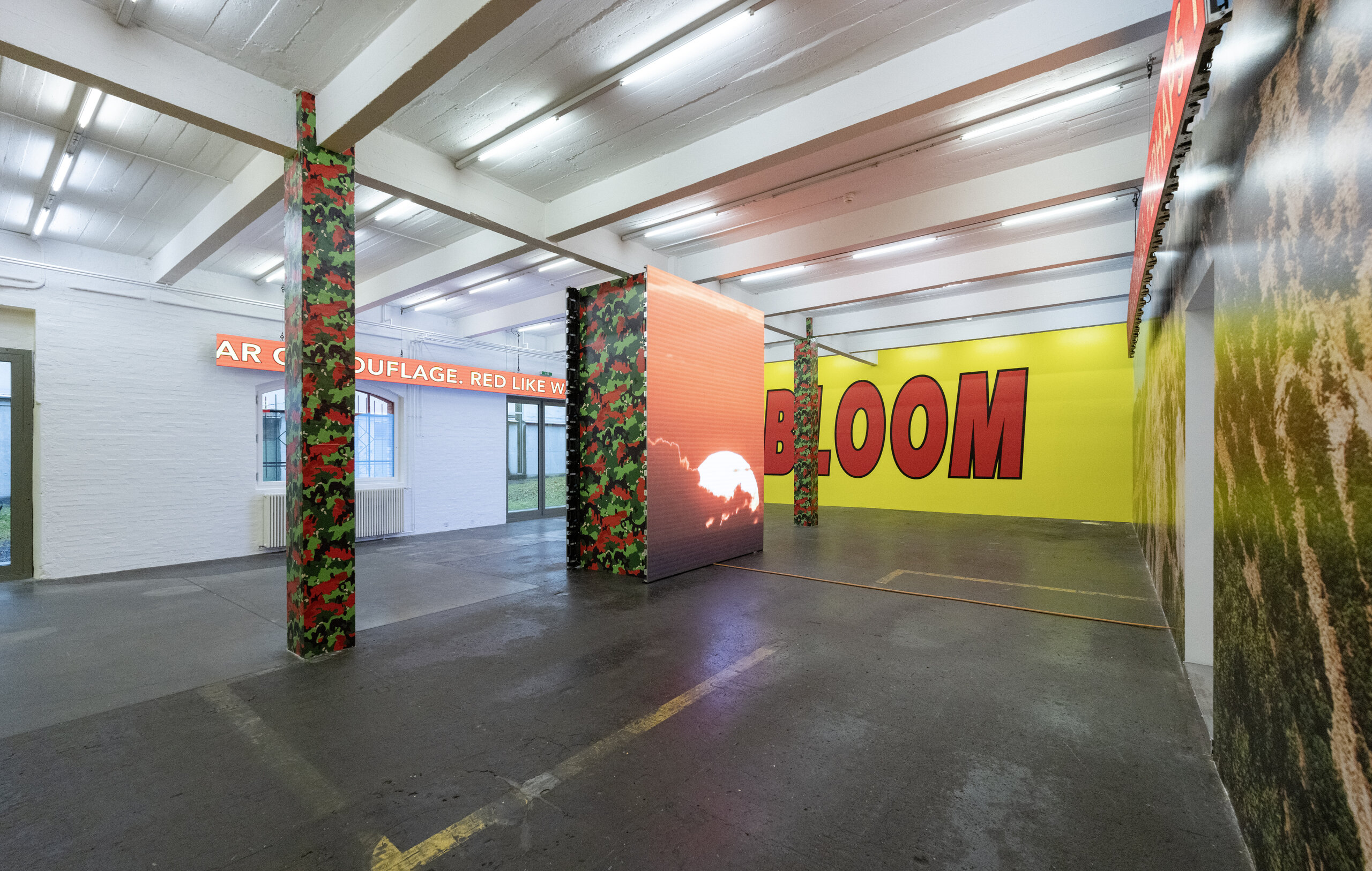
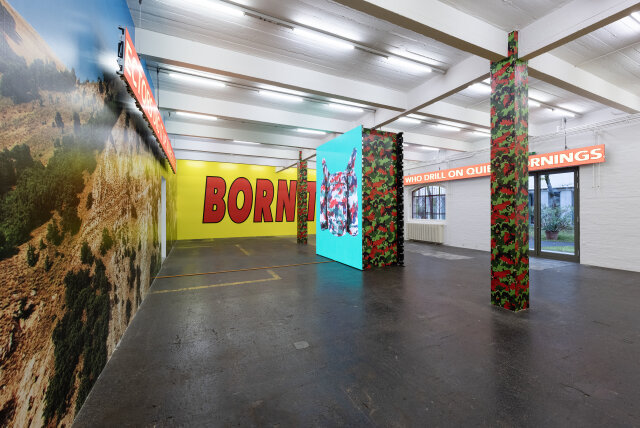
 Cemile Sahin, «BB – BORN TO BLOOM», installation view, 2025. Photo: Kunst Halle Sankt Gallen, E. Sommer. Courtesy: the artist and Esther Schipper, Berlin/Paris/Seoul.
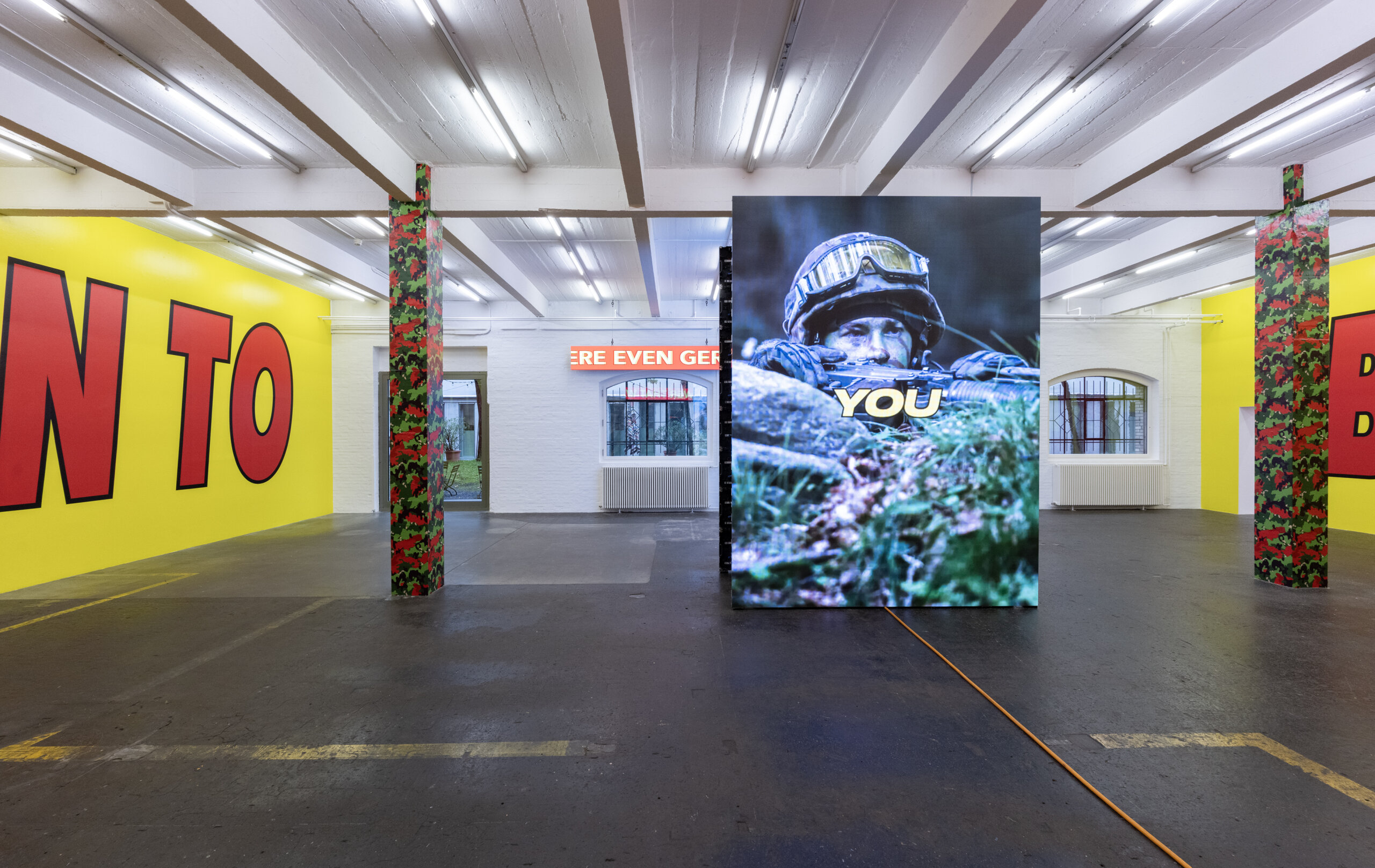 Cemile Sahin, «BB – BORN TO BLOOM, exhibition view, 2025. Photo: Kunst Halle Sankt Gallen, E. Sommer. Courtesy: the artist and Esther Schipper, Berlin/Paris/Seoul.
 Cemile Sahin, «BB – BORN TO BLOOM», installation view, 2025. Photo: Kunst Halle Sankt Gallen, E. Sommer. Courtesy: the artist and Esther Schipper, Berlin/Paris/Seoul.
 Cemile Sahin, «BB – BORN TO BLOOM», installation view, 2025. Photo: Kunst Halle Sankt Gallen, E. Sommer. Courtesy: the artist and Esther Schipper, Berlin/Paris/Seoul.
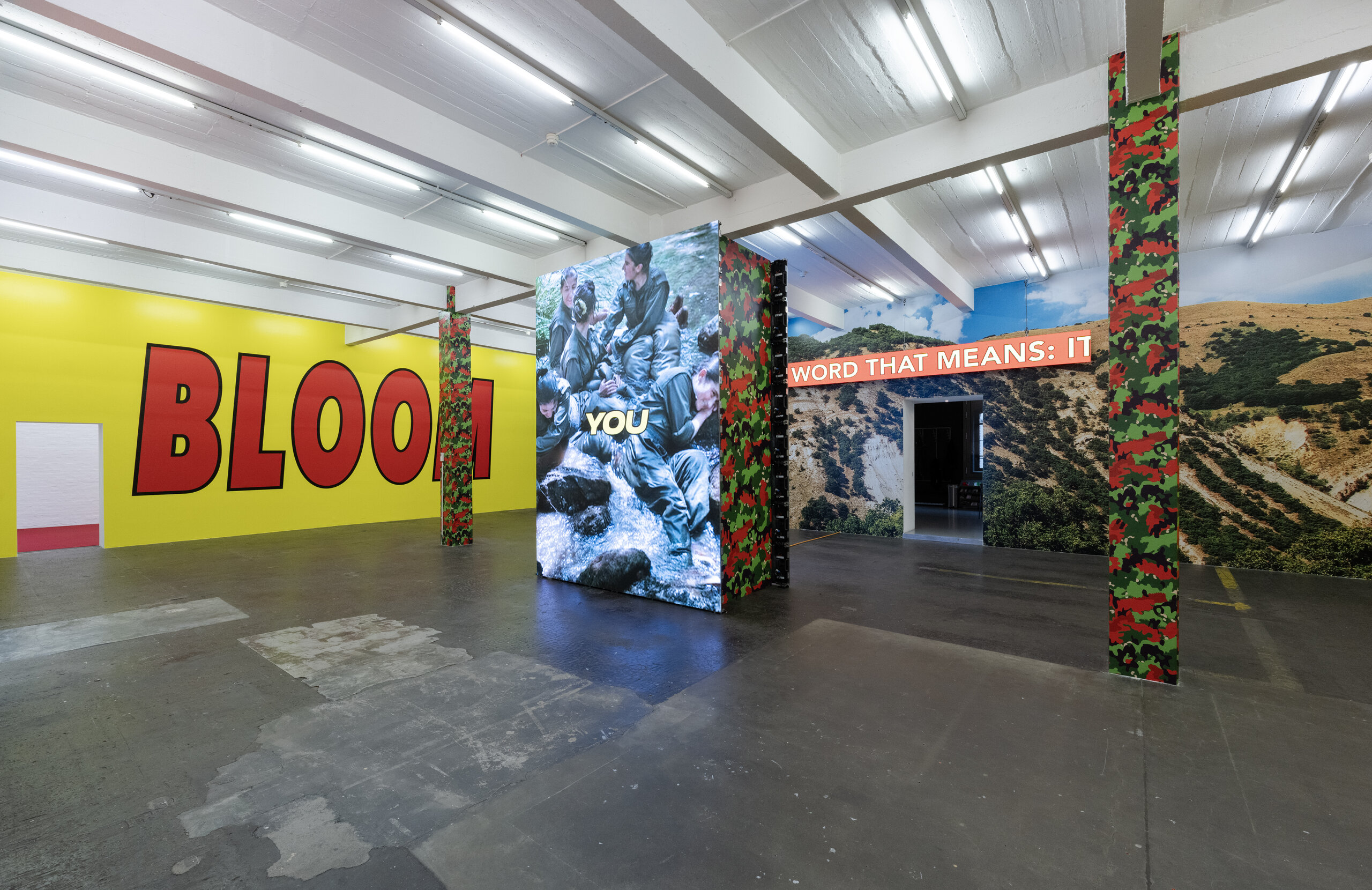 Cemile Sahin, «BB – BORN TO BLOOM», installation view, 2025. Photo: Kunst Halle Sankt Gallen, E. Sommer. Courtesy: the artist and Esther Schipper, Berlin/Paris/Seoul.
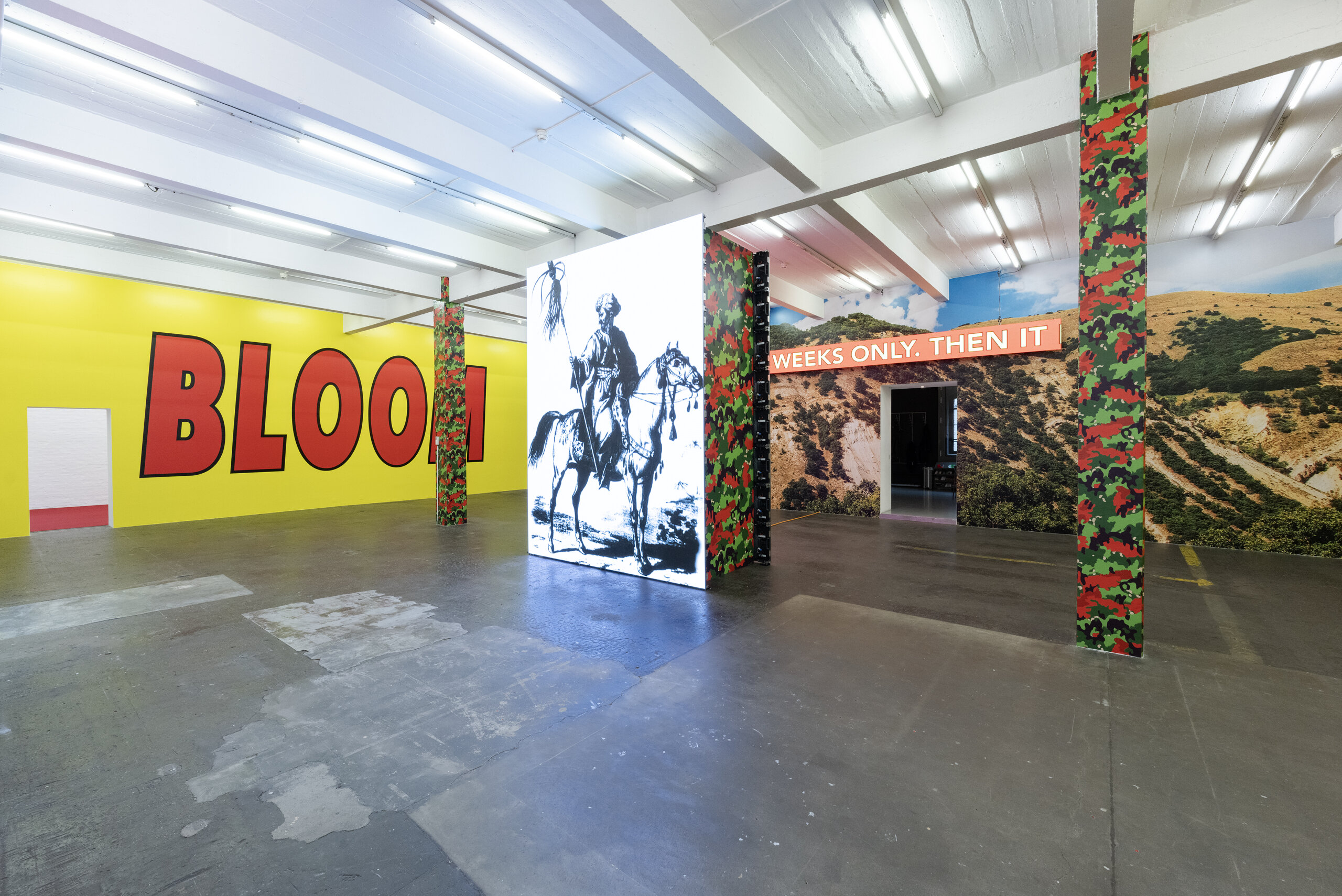 Cemile Sahin, «BB – BORN TO BLOOM», installation view, 2025. Photo: Kunst Halle Sankt Gallen, E. Sommer. Courtesy: the artist and Esther Schipper, Berlin/Paris/Seoul.
 Cemile Sahin, «BB – BORN TO BLOOM», installation view, 2025. Photo: Kunst Halle Sankt Gallen, E. Sommer. Courtesy: the artist and Esther Schipper, Berlin/Paris/Seoul.
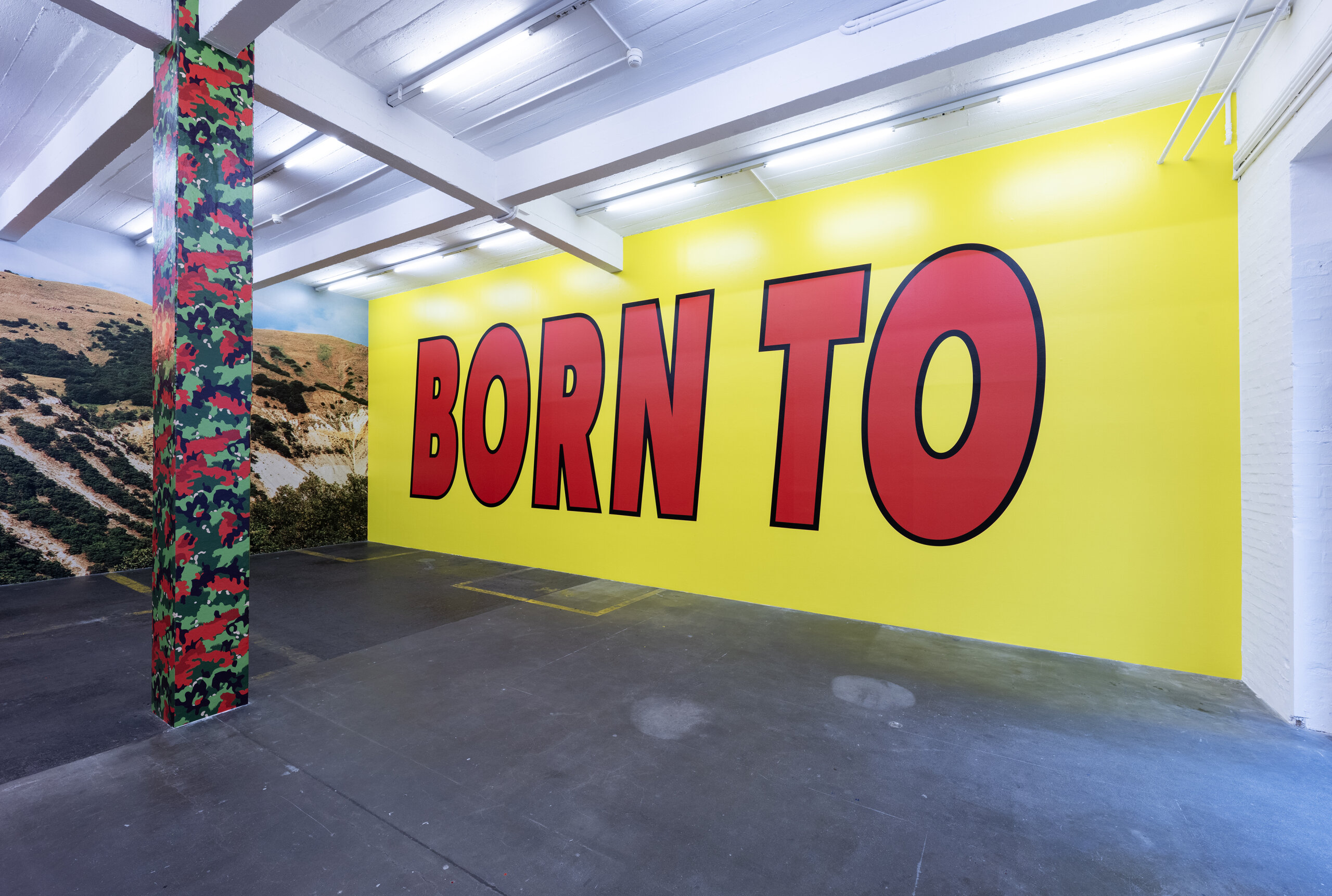 Cemile Sahin, «BB – BORN TO BLOOM», installation view, 2025. Photo: Kunst Halle Sankt Gallen, E. Sommer. Courtesy: the artist and Esther Schipper, Berlin/Paris/Seoul.
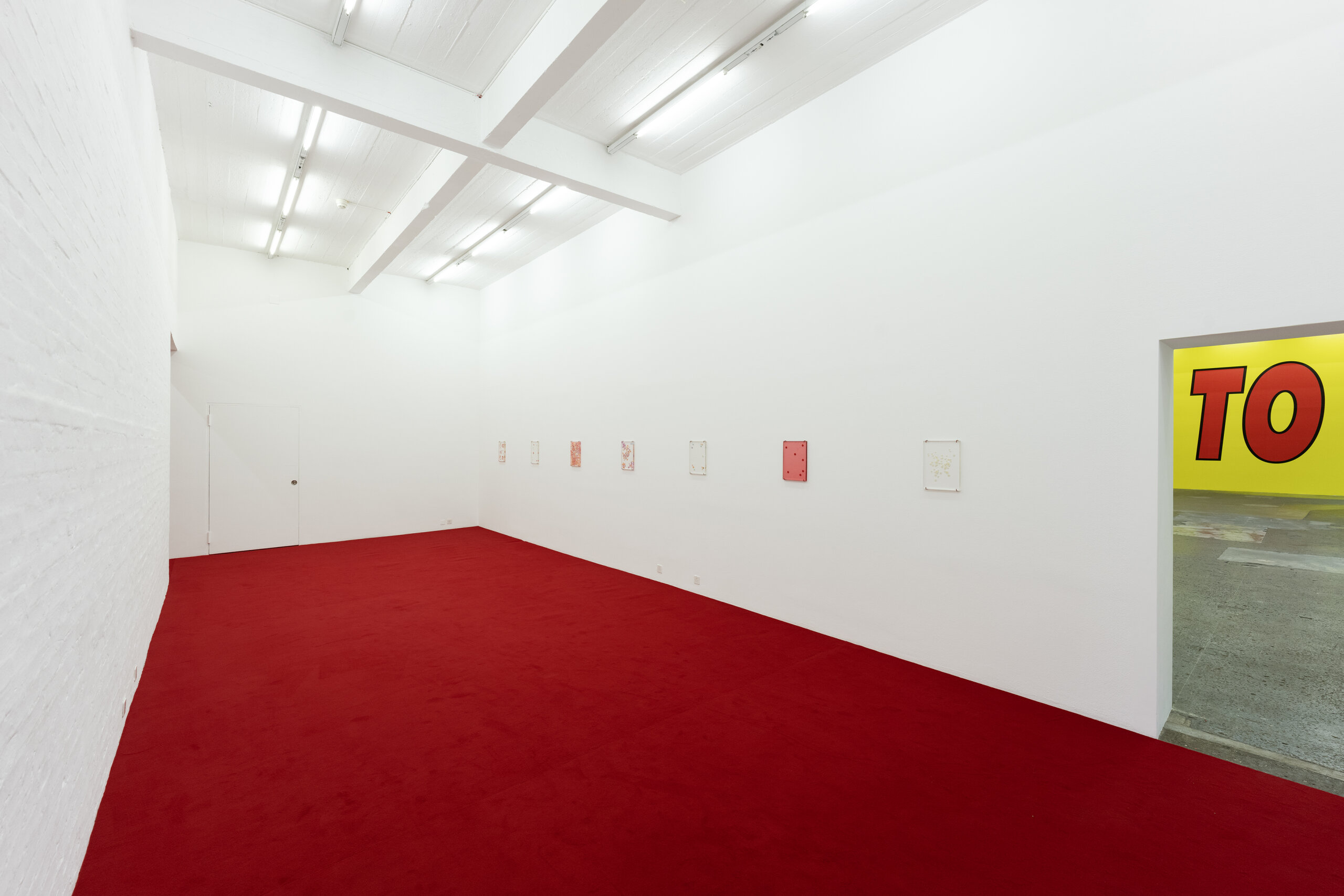 Cemile Sahin, «BB – BORN TO BLOOM», installation view, 2025. Photo: Kunst Halle Sankt Gallen, E. Sommer. Courtesy: the artist and Esther Schipper, Berlin/Paris/Seoul.
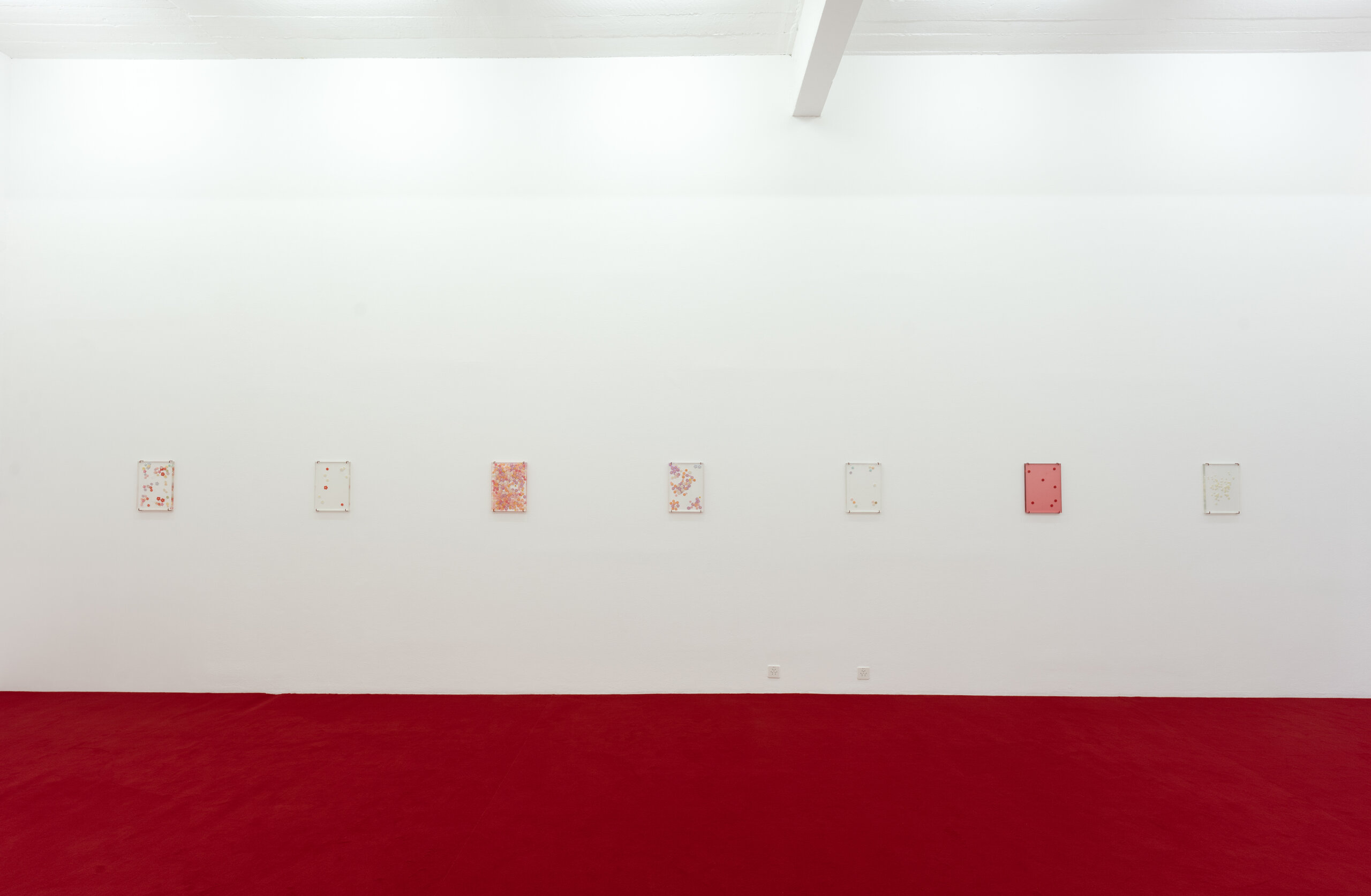 Cemile Sahin, «BB – BORN TO BLOOM», installation view, 2025. Photo: Kunst Halle Sankt Gallen, E. Sommer. Courtesy: the artist and Esther Schipper, Berlin/Paris/Seoul.
 Cemile Sahin, BB – BORN TO BLOOM, 2025. Photo: Kunst Halle Sankt Gallen, E. Sommer.
 Courtesy: the artist and Esther Schipper, Berlin/Paris/Seoul.
 Cemile Sahin, Rifle in the Closet, 2023. Photo: Kunst Halle Sankt Gallen, E. Sommer. Courtesy: the artist and Esther Schipper, Berlin/Paris/Seoul.
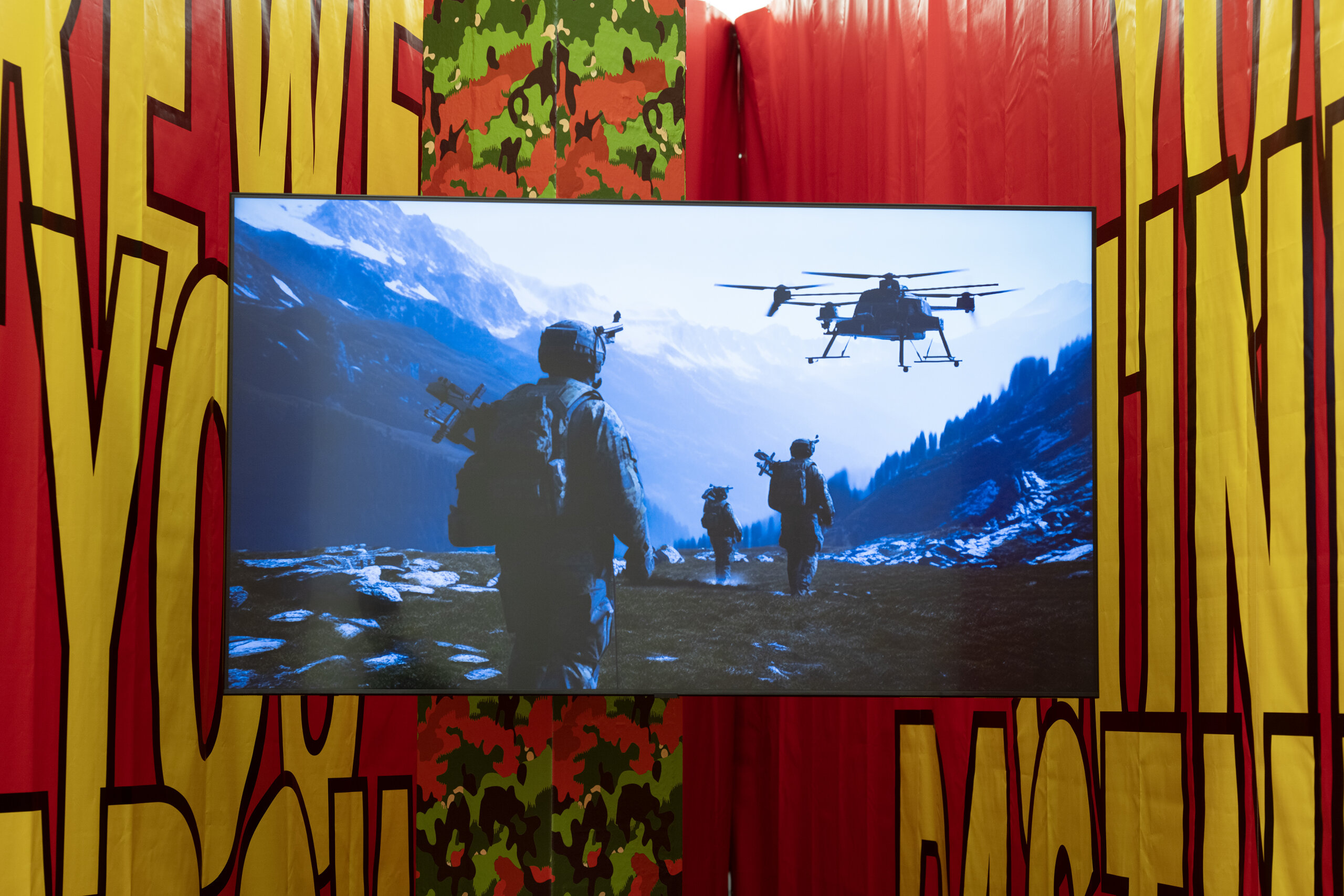 Cemile Sahin, Rifle in the Closet, detail, 2023. Photo: Kunst Halle Sankt Gallen, E. Sommer. Courtesy: the artist and Esther Schipper, Berlin/Paris/Seoul.
 Cemile Sahin, Rifle in the Closet, 2023. Photo: Kunst Halle Sankt Gallen, E. Sommer. Courtesy: the artist and Esther Schipper, Berlin/Paris/Seoul.
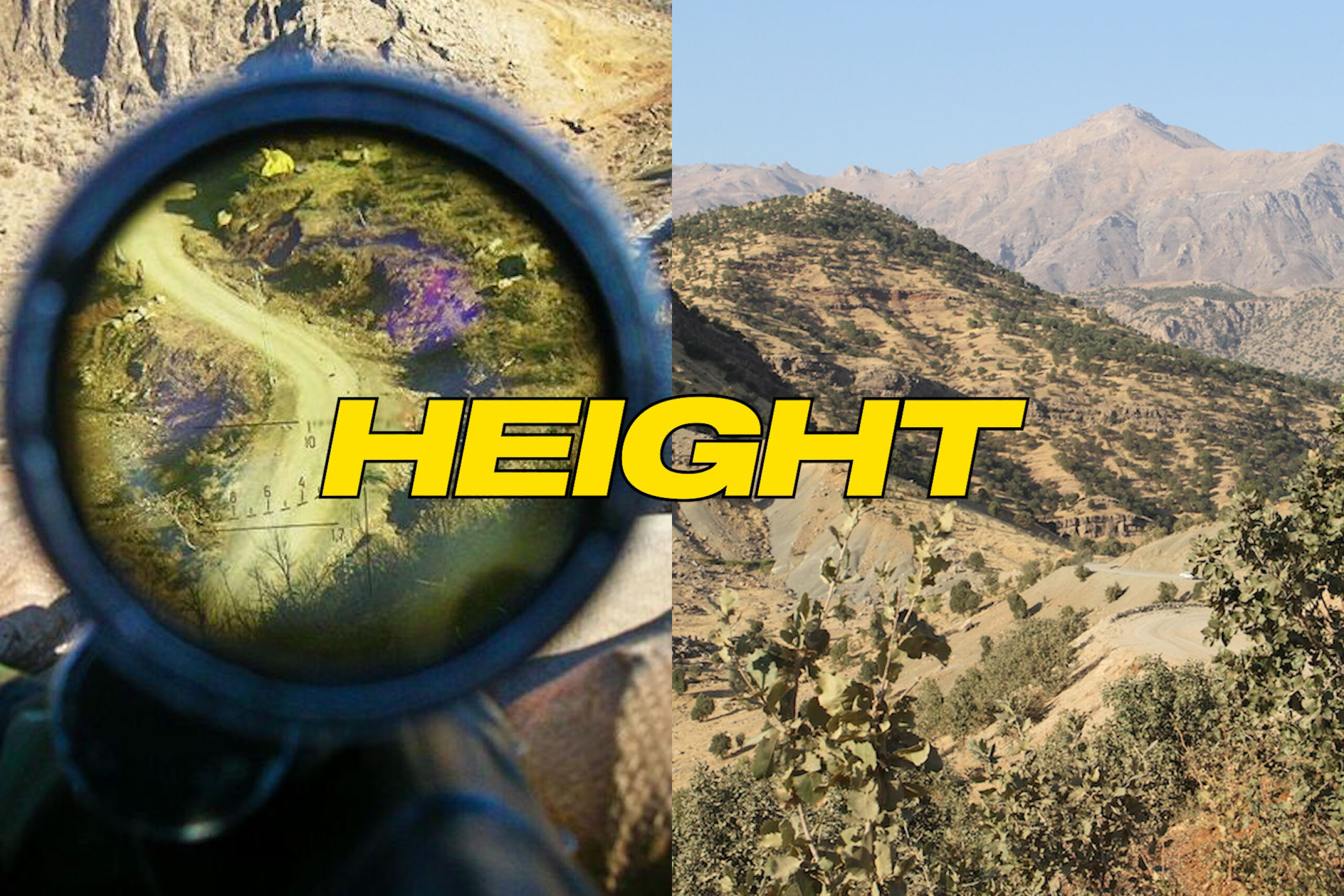 Cemile Sahin, BB – BORN TO BLOOM, video still (montage), 2025. Courtesy: the artist and Esther Schipper, Berlin/Paris/Seoul.
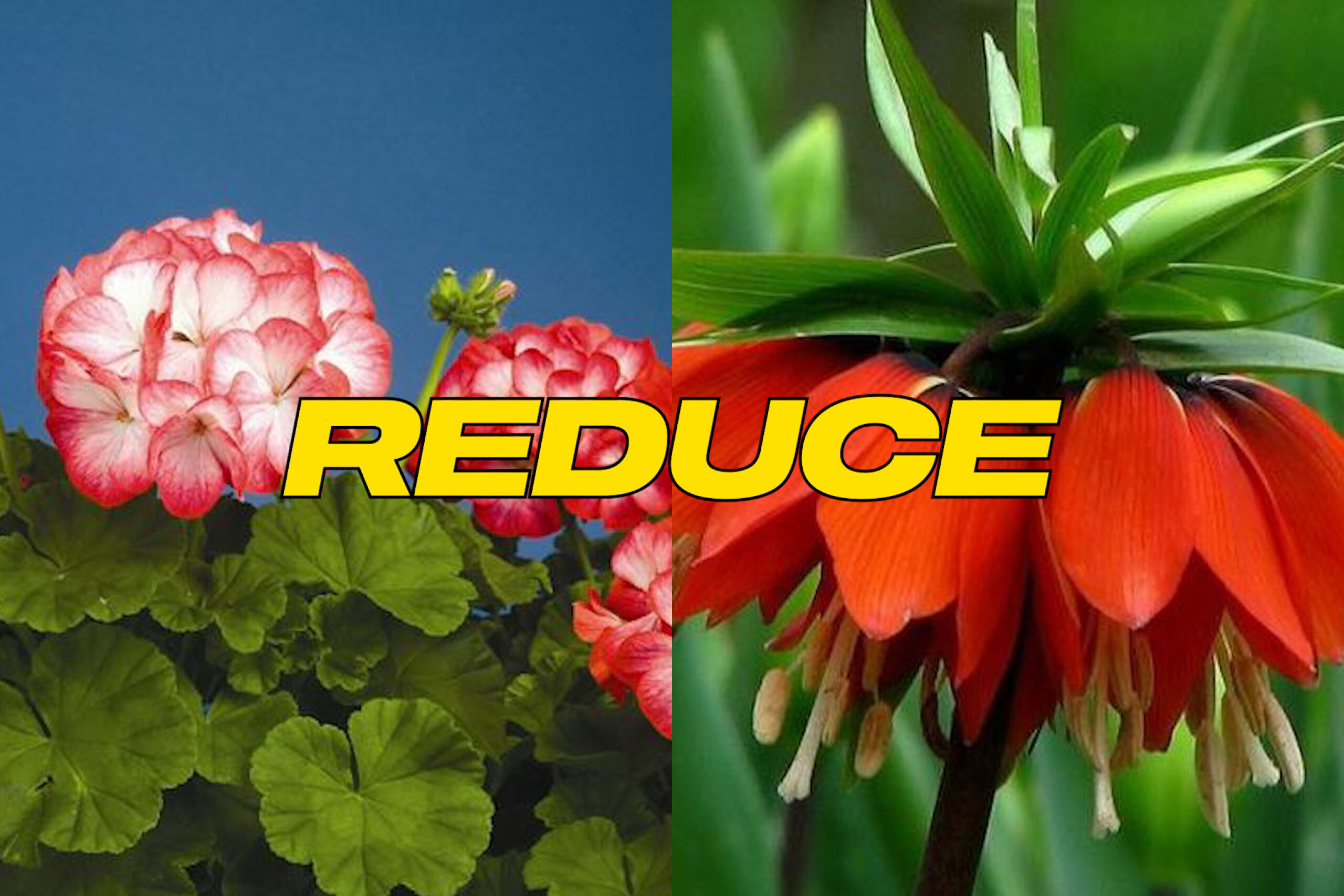 Cemile Sahin, BB – BORN TO BLOOM, video still (montage), 2025. Courtesy: the artist and Esther Schipper, Berlin/Paris/Seoul.
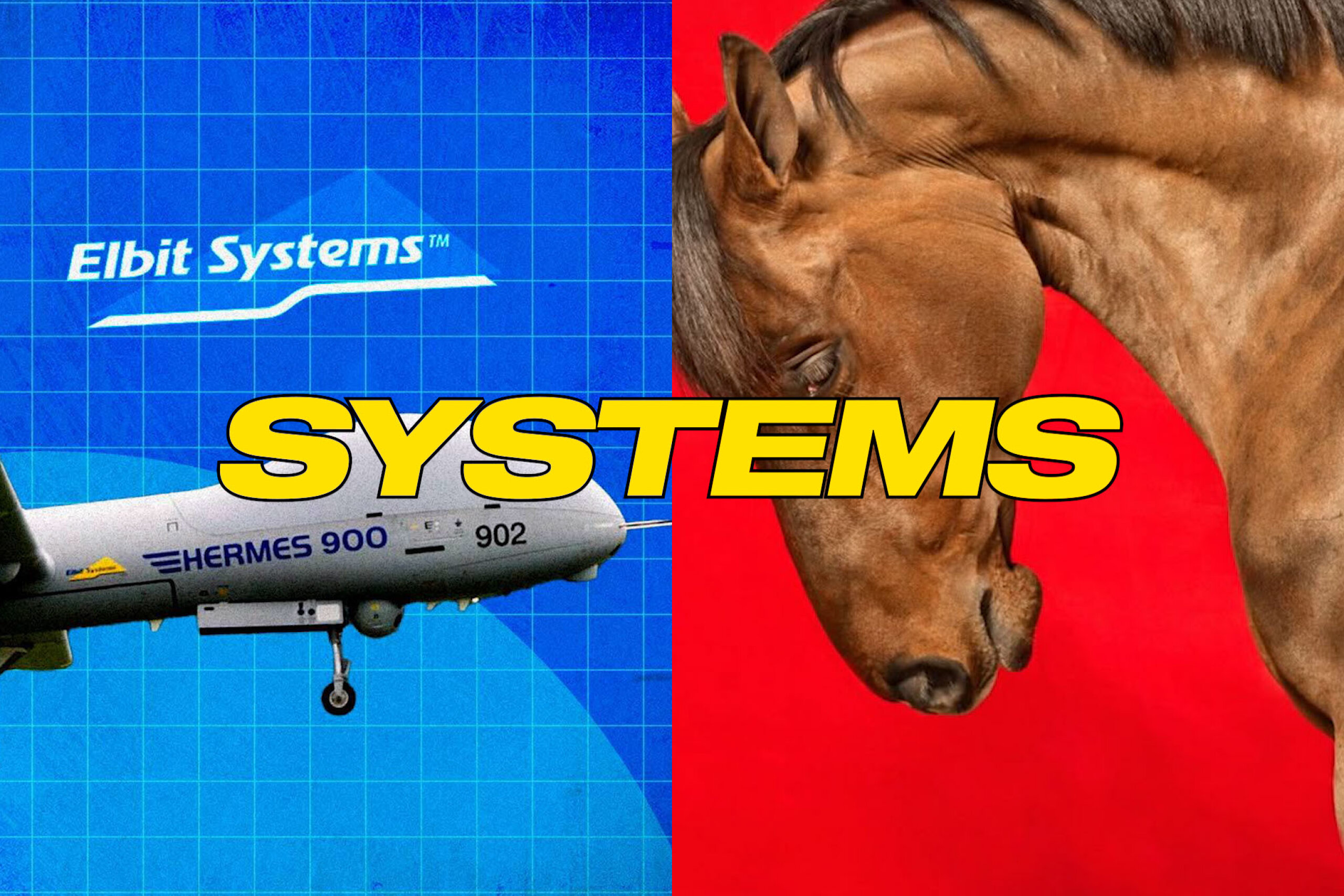 Cemile Sahin, BB – BORN TO BLOOM, video still (montage), 2025. Courtesy: the artist and Esther Schipper, Berlin/Paris/Seoul.
 Cemile Sahin, BB – BORN TO BLOOM, video still (montage), 2025. Courtesy: the artist and Esther Schipper, Berlin/Paris/Seoul.
BB – BORN TO BLOOM
Cemile Sahin
6 September–16 November 2025
Cemile Sahin (*1990 in Wiesbaden/DE) is a powerful visual storyteller. She works in a variety of media, including film, literature and installation. Her practice critically engages with issues of power structures, war, and violence. In her spatialised narrations, Sahin explores how the media, politics and warfare shape our understanding of history.
«BB – BORN TO BLOOM» is Sahin’s first solo exhibition in Switzerland. It continues her exploration of the intersection between war and nature – a theme she has examined in several previous works and exhibitions. Sahin investigates how nature becomes not only a site of armed conflict but also a tool of military strategy: landscapes become barriers, natural resources become causes for war, forests become camouflage. Importantly, nature also carries collective identity, making it a target of psychological warfare. These overlaps between war, nature, and technology form geopolitical entanglements, which Sahin brings into focus.
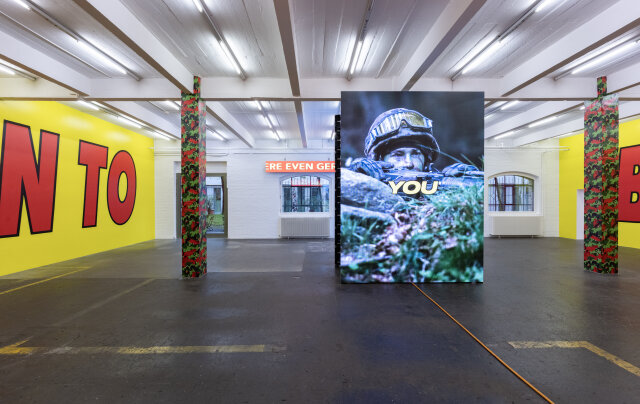
The exhibition centres around a four-channel video installation that brings together two topographies: Switzerland and Kurdistan. Both landscapes are defined by striking mountain views that hold great symbolic meaning. The LED wall in front of the entrance sports Switzerland: the Matterhorn, snow-covered mountain passes, hiking maps. Alongside Rolex and ski lifts, the Swiss mountains serve as postcard motifs for ‹Swissness›, promoting fairness, precision, safety, political stability and pristineness. The LED-wall facing the windows features Kurdistan: the country that is not allowed to exist, whose displaced people live militantly in the mountains, poised between weapons and resistance. Cemile Sahin knows about the power of images: they perpetuate cultural clichés through their constant repetition in the media. On the LED screens, Sahin bombards us with bold, poster-like motifs until they flip: the romanticised Swiss Alps are revealed as a military dispositif, riddled with bunker structures and serving as an arena for tank exercises; on the other side, the Kurdish mountain ranges emerge as a homeland that sustains life as well as cultural heritage, and embodies long-awaited freedom.
Both landscapes, as different as their symbolic value may be, are politically linked. On 24 July 1923, the ‹Treaty of Lausanne› was signed at the Château d’Ouchy. The treaty established the borders of modern-day Turkey, thereby undermining the territorial sovereignty of the Kurdish people. To this day, the geopolitical power relations established at that time continue to shape the Kurdish mountain regions, the Zagros, Qendîl and Cudî mountains. Meanwhile, Lausanne has become a world-leading development site for drones, which, as weapon systems, are an essential component of the wars in the Middle East.
Once again, the conjunction of technology, war, and nature examined by Sahin produces powerful images. For her arresting video montage, she spent weeks gathering footage from across the internet: social media posts, cell phone videos taken by her cousins, luxury brand advertisements, videos from the Swiss Army’s YouTube channel, Kurdish archive material, comics, promotional films by armasuisse, video games. In her radical use of imagery, Sahin shows that «media are never innocent; they are accessories to all sorts of violence» (Mitchell Akiyama). Images shape our collective memory; they are politically constructed and used in the contexts of war. The oppression of a people often goes hand in hand with the erasure of their visual culture – for example, traditional Kurdish clothing, which repeatedly flashes up on the Kurdish side of Sahin’s montage, has been banned in Turkey. At the same time, images, especially in combination with text, have a powerful pull on us. Social media exploit this effect through their algorithms, a logic that Cemile Sahin references in both the soundtrack and the fast-paced editing.
However, Sahin’s video installation does not fire off its images without poetry. Her montage forms a composition mirrored on both sides, unfolding from sunrise to sunset and spanning a cycle of seasons. Two flowers come to symbolise the ambiguities explored in «BB – BORN TO BLOOM». On the LED strip above the mountain wallpaper, we encounter Gula Xemgîn, the «sad flower». It blooms exclusively at high altitudes, from April to May, and represents the Kurdish myth that one can only be truly free in the mountains. «It cannot live in gardens. It dies in pots. It rejects exile. Perhaps that is why they call it Kurdish». The LED strip above the windows tells of the geranium, adorning balconies and gardens throughout the country. «In a country that trains for war without declaring one, even flowers wear camouflage». Geraniums are such a familiar feature of the Swiss landscape that their red colour was incorporated into the TAZ 83 camouflage suit – the very pattern that now covers the columns of the Kunst Halle Sankt Gallen. In this way, Sahin creates a metaphor for the entanglement between landscape and violence.
Sahin approaches complex themes through a pop-cultural aesthetic. Bright colours, artificiality, advertising slogans, glossy surfaces, and sparkly motifs are some of her signature style elements. The second room provides a respite from media overload: acrylic flowers in epoxy resin form desirable objects that resemble oversized nail art. Here, too, Sahin plays with stereotypical ideas. While flowers and extra-long gel nails are often considered devalued attributes of femininity, the exhibition title, which is also the title of this series’ works, manifests a desire for self-expression.
In the final room, Sahin presents a newly spatialized video work developed in 2023 at the Kunstverein Wiesbaden. Gewehr im Schrank – Rifle in the Closet features an AI-generated newsreader reciting verses from Friedrich Schiller’s Wilhelm Tell directly into a simulated camera. Like Heidi, the hero of Uri is an identity-forming figure in Switzerland, whose story is deeply embedded in idyllic landscapes («Farewell, you meadows,/You sunny pastures!»). This landscape reappears in computer-generated simulations developed at Swiss universities for war training. Sahin combines these motifs with point-of-view shots of real-world military exercises and AI-generated images of assault rifles in fields of flowers, alluding to Switzerland’s status as one of the European countries with the highest density of firearms in private households.
Cemile Sahin’s works interrogate how images are constructed through media, politics, and history. In doing so, the artist repeatedly confronts us with our own gaze upon the world. The marketing language and social media aesthetics on the LED wall deliberately employ direct address: «YOU INVENT LEGENDS / YOU INVENT DREAMS / YOU INVENT TRUST». Yet here, too, the textual images flip their meaning when we realise that the true addressees are not us, but the mountains.
The exhibition of Cemile Sahin is supported by philaneo. Special thanks to event ag, Grafitec AG, and Esther Schipper, Berlin/Paris/Seoul.
- Opening Cemile Sahin
- Friday, 5 September 2025, 6pm
- Kunst Halle Sankt Gallen at Klang Moor Schopfe
- Sunday, 7 September 2025, 12pm
- Cemile Sahin: Guided Tour on Tuesday
- Tuesday, 9 September 2025, 6pm
- Museum Night
- Saturday, 13 September 2025, 6pm
- Art Snack
- Thursday, 18 September 2025, 12.30pm
- Art Lunch
- Thursday, 6 November 2025, 12pm
- Cemile Sahin: Guided Tour on Sunday
- Sunday, 16 November 2025, 3pm

Biography
Cemile Sahin, *1990 in Wiesbaden/DE, lives and works in Berlin/DE. Solo exhibitions (selection): «ROAD RUNNER», Esther Schipper, Berlin/DE (2025); «Gewehr im Schrank – Rifle in the closet», Nassauischer Kunstverein Wiesbaden, Wiesbaden/DE (2023); «A Song of Tigris and Euphrates», Kunsthalle Osnabrück, Osnabrück/DE (2022); «It Would Have Taught Me Wisdom», Esther Schipper, Berlin/DE (2021). Group exhibitions and film festivals (selection): «Sieh Dir die Menschen an!», Kunstsammlung Chemnitz, Chemnitz/DE (2024); «white sea olive groves», Malta Art Biennale, Valletta/MT (2024); «The View», The Loft, Brüssel/BE (2024); «Sieh dir die Menschen an», Kunstmuseum Stuttgart, Stuttgart/DE (2023); «Four Ballads for my Father – Spring screening», Fridericianum, Kassel/DE (2023); «Rifle in the Closet screening», St. Moritz Art Film Festival, St. Moritz/CH (2023); «Looking for Humanity», Kunstmuseum Magdeburg, Magdeburg/DE (2023); «Manifesto of Fragility: Biennale de Lyon 2022», Lyon Biennial, Lyon/FR (2022); «Identität nicht nachgewiesen», Bundeskunsthalle, Bonn/DE (2022); «Arbeit am Gedächtnis – Transforming Archives», Akademie der Künste, Berlin/DE (2021); «STUDIO BERLIN», Berghain, Berlin/DE (2020); «ars viva 2020», Kunstverein, Hamburg/DE (2020). Prizes: Nomination for the ‹Preis der Leipziger Buchmesse›, for the novel KOMMANDO AJAX (2025); ‹CIRCA Prize 2023›, for the movie Four Ballads for my Father – Spring (2023); ‹Alfred Döblin-Medaille 2020› for the novel TAXI (2020); ‹ars viva Prize 2020› (2019). Novels: TAXI (2019), ALLE HUNDE STERBEN (2020), KOMMANDO AJAX (2024).
Downloads
Hallo!
Wir sind die Kunst Halle Sankt Gallen.
Die Kunst Halle zeigt neue Kunst.
Hier können neue Ideen entstehen.
Wir unterstützen Künstlerinnen und Künstler, damit sie neue Werke schaffen können.
Wir arbeiten auch mit anderen Kunstorten in der Schweiz und weltweit zusammen.
Im Moment zeigen wir die Ausstellung «Octogone» von Chalisée Naamani.
Hier gibt es Informationen zur Ausstellung.
Unsere Öffnungszeiten sind:
von Dienstag bis Freitag, von 12 bis 18 Uhr.
Samstag und Sonntag, von 11 bis 17 Uhr
Montags und an bestimmten Feiertagen geschlossen.
Wir haben nur geöffnet, wenn wir eine Ausstellung zeigen.
Unsere Eintrittspreise sind:
Normal: CHF 7
Studierende und Kulturlegi: CHF 2
Freier Eintritt für:
Mitglieder der Kunst Halle
Raiffeisenkarte
Schweizer Museumspass
Kinder und Jugendliche bis 18 Jahre
Schulklassen aus dem Kanton St.Gallen
Wir sind hier:
Kunst Halle Sankt Gallen
Davidstrasse 40
9000 St.Gallen
Barrierefreiheit
Die Kunst Halle Sankt Gallen ist fast ohne Hindernisse zugänglich.
Der Haupteingang der Kunst Halle ist an der Davidstrasse. Dort gibt es eine Treppe.
Der barrierearme Zugang ist über den Hinterhof.
Der Zugang zum Hinterhof ist an der Ecke Geltenwilerstrasse und Davidstrasse.
Es gibt eine Rampe (ungefähr 8 % Steigung), und der Weg ist asphaltiert.
Rufen Sie uns an, wenn Sie im Hinterhof sind. Wir schliessen die Türe auf.
Die Toilette für Menschen mit Behinderungen ist im 1. Obergeschoss. Sie ist mit Begleitpersonen zugänglich.
Brauchen Sie Assistenz?
Wir wollen, dass alle Menschen uns gut erreichen können.
Haben Sie Fragen? Möchten Sie mehr wissen?
Rufen Sie uns an oder schreiben Sie uns.
Wir helfen gerne!
Kontakt
Telefon: +41 71 222 10 14
Email: info@k9000.ch
Hello!
We are Kunst Halle Sankt Gallen.
We show new art.
This is a place where new ideas can grow.
We help artists create new works.
We also work with other art places in Switzerland and around the world.
You can currently visit the exhibition «Octogone» by Chalisée Naamani.
Find Information on the exhibition here.
Our Opening Hours
from Tuesday to Friday, from 12 p.m. to 6 p.m.
Saturday and Sunday, from 11 a.m. to 5 p.m.
Closed on Mondays and certain public holidays.
We are only open when we show exhibitions.
Admission Prices
Regular: CHF 7
Students and KulturLegi holders: CHF 2
Free admission for:
Kunst Halle members
Raiffeisen card holders
Swiss Museum Pass holders
Children and young people under 18
School classes from the canton of St.Gallen
How to Find Us
Kunst Halle Sankt Gallen
Davidstrasse 40
9000 St. Gallen
Accessibility
The Kunst Halle Sankt Gallen is almost free of barriers.
The main entrance is on Davidstrasse. It has stairs.
The accessible entrance is via the courtyard.
The entrance to the courtyard is at the corner of Geltenwilerstrasse and Davidstrasse.
There is a ramp (approx. 8% incline), and the path is paved.
Call us when you enter via the courtyard. We will open the door for you.
The restroom for wheelchair users is on the first floor. It is accessible for wheelchair users with accompanying persons.
Need Assistance?
We want everyone to be able to visit us comfortably.
Do you have questions? Would you like more information about our services?
Give us a call or send us an email.
We’re happy to help!
Contact
Phone: +41 71 222 10 14
Email: info@k9000.ch

• Membership 2026: Apply Now!

Art Lunch• Art Lunch27 August 2026, 12 p.m.in the exhibition of Chalisée Naamani

Museum night• Museum night12 September 2025, 6-midnightIn the exhibition of Chalisée Naamani

Guided tour on Sunday• Guided tour on Sunday13 September 2026, 3 p.m.Guided tour through the exhibition with Chalisée Naamani
see your message here ↓